
Road User Charges explained: a practical guide for New Zealand vehicle owners

Road User Charges, usually shortened to RUC, help fund the upkeep of New Zealand roads. If you drive a diesel, electric, plug-in hybrid, or another RUC-liable vehicle, understanding the basics makes compliance much easier.

Who needs to pay RUC?

RUC generally applies to vehicles that do not contribute road tax through petrol excise duty. That includes most diesel vehicles and, under current rules, electric and plug-in hybrid vehicles. Heavy vehicles may also have licences linked to vehicle type and weight.

The registered person is responsible for ensuring the vehicle has a current distance licence. Drivers should also be able to confirm that the vehicle is covered before beginning a journey.

  • Check whether your vehicle is RUC liable.
  • Record the current odometer or approved distance reading.
  • Purchase enough distance before the existing licence expires.
  • Keep the licence information available and accurate.

How distance licences work

A RUC licence covers a set distance. As the vehicle travels, the remaining kilometres reduce. A new licence needs to be purchased before the vehicle moves beyond the distance already covered.

For a single vehicle this can be a simple check. For a fleet, different routes, drivers, and utilisation levels make manual monitoring much harder. A connected system gives operators one place to see what is due and act before a vehicle runs short.

A simpler way to stay compliant

myRUC brings RUC information, purchasing, and records into a digital workflow. Depending on your setup, distance information can be entered through the app or supplied by connected vehicle technology.

The goal is straightforward: give drivers and administrators clearer information, reduce paper handling, and make renewals part of normal vehicle management rather than a last-minute task.
Posted in RUC

Electronic RUC displays: what drivers and operators need to know

An electronic RUC display replaces the repeated handling of printed labels with a display designed to show current licence information in the vehicle. It is a visible part of a wider digital RUC workflow.

What the display shows

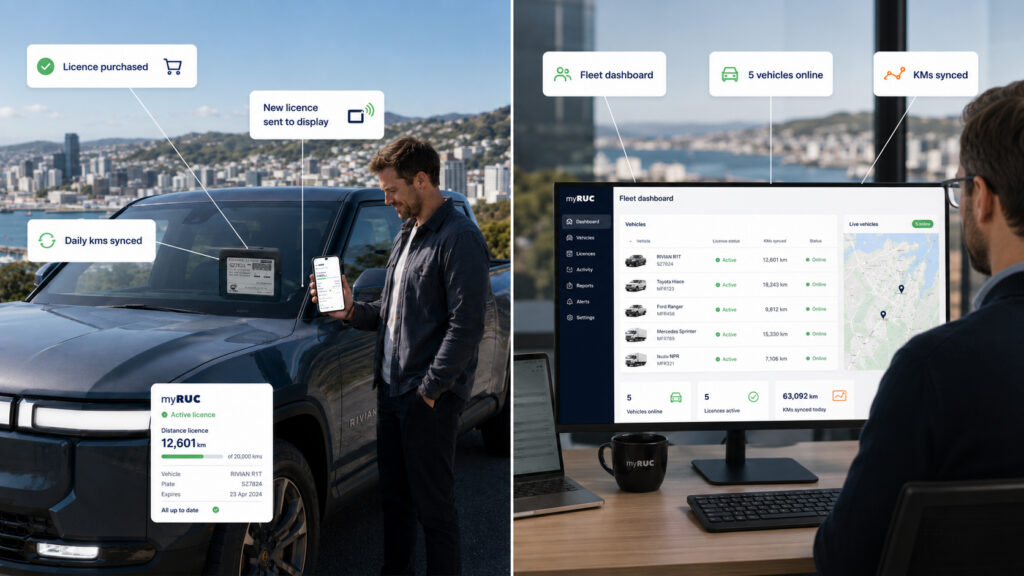
The display presents the compliance information required for the vehicle. When a new licence is purchased through myRUC, the updated information can be transferred to the display rather than printed and physically replaced.

E-ink technology is well suited to this task because information remains visible without a continuously illuminated screen. The result is designed to be clear, low maintenance, and practical for daily vehicle use.

What drivers should check

Before travelling, drivers should make a quick visual check that the display is fitted correctly and showing the expected vehicle and licence information.

  • The display is visible and secure.
  • The vehicle details are correct.
  • The licence distance covers the intended journey.
  • Any recent update has completed successfully.

Classic and connected fleet setups

Different operators need different levels of automation. An owner-driver may use the app and display directly, while a fleet may connect telematics or specialist distance-recording technology to support central administration.

The right setup depends on vehicle type, existing systems, and how much day-to-day control the administration team needs.

Posted in RUC

What myRUC changes

For many New Zealand fleet operators, road user charge management still takes too much time. Drivers need to know when distance is running low, admin teams need to check balances, and managers need confidence that every vehicle stays compliant without chasing paper labels or last-minute renewals.

As fleet size grows, that manual process becomes harder to control. What works for one or two vehicles often breaks down when multiple drivers, different routes, and varying monthly distances are involved.

What myRUC changes

myRUC replaces the old paper-based approach with a digital system that is easier to manage day to day. Instead of relying on printed labels and manual tracking, operators can manage road user charging through a connected process designed for real vehicle use.

That means less guesswork, fewer interruptions, and a clearer way to stay on top of compliance.

Good compliance systems should reduce admin pressure, not add to it.

Key benefits for fleet managers

  • Less time spent checking licence distance manually
  • Better visibility across multiple vehicles
  • Fewer compliance surprises
  • A cleaner process for drivers and admin teams
  • More confidence when vehicles are on the road every day

How the process works in practice

A typical workflow starts with installing the myRUC display hardware in the vehicle and connecting it to the platform. From there, road user charging information can be managed in a more structured way, helping fleets avoid the stop-start friction that often comes with manual RUC handling.

  1. Set up the vehicle with the correct myRUC product
  2. Track usage and charging status through the digital workflow
  3. Review activity across the fleet when needed
  4. Keep vehicles compliant without relying on paper-based reminders

Why this matters for growing fleets

Once a fleet expands, small inefficiencies multiply quickly. A few missed checks can become repeated admin tasks. A process that depends on one person remembering every renewal point is difficult to scale. myRUC gives operators a more modern foundation for managing this part of fleet compliance.

It is especially useful for businesses that want a simple experience for drivers while giving managers a clearer operational picture behind the scenes.

Choosing the right setup

Different operators need different levels of visibility and workflow support. Some want a straightforward in-vehicle setup for individual drivers. Others need more control across multiple vehicles and teams. The best setup usually depends on fleet size, reporting needs, and how hands-on the day-to-day management needs to be.

Final thoughts

Road user charging is a necessary part of operating diesel and RUC-eligible vehicles in New Zealand, but it does not need to stay manual and time-consuming. A better system should help fleets stay compliant while reducing day-to-day admin.

If your team is spending too much time managing RUC manually, myRUC offers a more practical way forward.

Talk to the myRUC team to find the right setup for your vehicles.